
Now that offices are back in full swing, it’s worth stepping back and reflecting on how much the workplace has genuinely changed since the days when “heading back to the office” felt like an open question.
The transition wasn’t seamless for anyone. Some team members never came back. Others stayed remote permanently. And the companies that navigated it well were the ones willing to rethink what the office is actually for.
What the modern office looks like now
The physical changes that felt uncertain a few years ago are largely standard today:
- Touchless entry and voice-activated building features
- Thoughtfully spaced private workspaces replacing sprawling open floor plans
- Smarter ventilation, UV sanitation systems, and antimicrobial materials built into the design
- Fewer, more intentional gathering spaces
- Cleaner, more consistent signage and posted protocols
- These weren’t just pandemic responses. They’ve become baseline expectations for what a well-run, people-centered workplace looks like.
The hybrid question has mostly been answered
For a while, companies debated whether productivity would suffer if employees stayed home. That debate has largely settled. The organizations that invested in clear policies, the right tools, and a culture of trust found their teams adapted well, wherever they were working.
What’s become clear is that the office serves a different purpose now. It’s less about heads-down, individual work and more about collaboration, connection, and the kind of problem-solving that’s genuinely easier when people are in the same room.
What this means for space
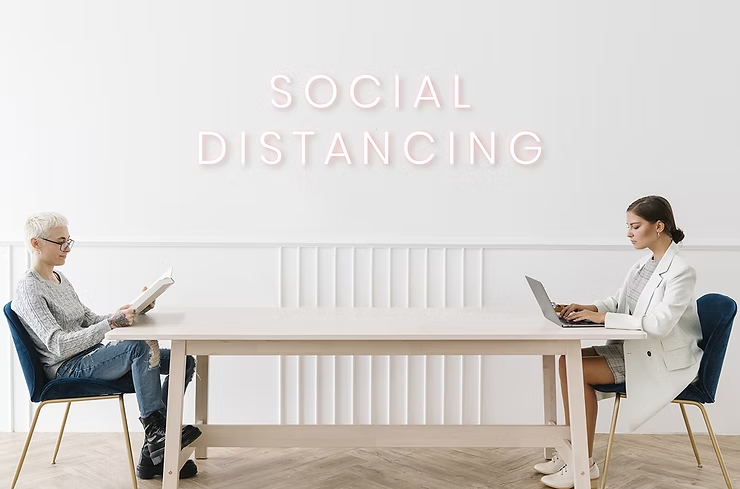
The shift hasn’t necessarily meant less square footage, but it has meant smarter use of it. The race to maximize open floor plans has given way to a more intentional approach: fewer seats, better spaces, and environments designed around how people actually want to work together.
For teams managing branded environments, signage, and the materials that fill those spaces, that shift matters. The office is a reflection of your culture now more than ever, and the details carry more weight than they used to.
The bottom line
The “new normal” everyone talked about in 2020 is just normal now. And for the most part, the workplace is better for it, more flexible, more thoughtful, and more focused on the people in it.